Introduction: Why Sleep Tech Is No Longer Optional
In 2025, achieving quality sleep is less about just lying down and more about smart tools, data insights, and responsive environments. What we once thought of as a good mattress and dark room is now just the baseline. The real edge comes from Sleep Technology Devices that monitor, adjust, and optimize every facet of rest.
From wearables to smart beds, AI-powered trackers to ambient sensors, the world of sleep tech is evolving rapidly — helping millions reclaim sleep lost to stress, screens, and overly busy lives. The global market for sleep tech devices is forecast to grow substantially, reflecting how restless many of us have become.
This guide explores the major categories of sleep technology devices, how they work, their potential benefits (and limitations), and how you can integrate them into your routine. By the end, you’ll understand what the future of rest looks like — and how to make it your present.
Chronotypes Explained: Are You a Lion, Bear, Wolf, or Dolphin?
What Counts as Sleep Technology Devices?
When we talk about Sleep Technology Devices, the term covers a wide spectrum, including:
- Wearables (rings, watches, headbands) that track sleep stages and biometrics.
- Smart mattresses and bed systems that adjust temperature, firmness, or position.
- Sleep environment devices: smart lights, noise systems, ambient sensors.
- Non‐wearable monitors: radar, under‐mattress sensors, bedside hubs.
- AI and software platforms that analyze data and provide personalized sleep coaching.
Because so many of these devices interconnect, your bedroom is fast becoming a sleep ecosystem rather than just a place to lie down.
The 2025 Landscape: Why Sleep Tech Devices Are Taking Off
Market Growth
According to recent research, the global market for sleep technology devices is expected to grow from around USD 24.85 billion in 2024 to roughly USD 29.30 billion in 2025, and then soar toward USD 134.6 billion by 2034. Another report puts the 2025 market size near USD 23.32 billion, with a compound annual growth rate (CAGR) of about 16.7% through 2032.
This surge reflects rising awareness of sleep disorders, increased remote health monitoring, and consumer interest in optimizing rest.
Technological Innovation
In 2025, key innovations in Sleep Technology Devices include:
- AI and machine learning embedded in wearables and bed sensors for better sleep stage classification.
- Non‐contact monitoring (radar, under‐mattress sensors) offering comfort and minimal intrusion.
- Smart bed systems regulating temperature, climate, and environment automatically.
- Wearables shifting from wrist to more subtle forms (smart rings, headbands) for sleep tracking.
Changing Consumer Behavior
Sleep is no longer passive. Many people now expect insights, coaching and actionable data — not just tracking. The rise of “sleep-wellness” means Sleep Technology Devices must do more than monitor; they must help improve.
Key Categories of Sleep Technology Devices
1. Wearables & Rings
Wearables remain one of the most visible categories of sleep technology devices. Smart watches and rings now not only track steps or heart rate, but also monitor sleep stages, breathing patterns and sometimes even sleep apnea indicators.
For example, smart rings in 2025 have grown significantly in popularity — with companies like Oura selling millions of units and pushing into advanced metrics.
Pros: portable, convenient, increasingly accurate.
Limitations: still reliant on skin contact; some accuracy issues; comfort may vary.
Key use case: track sleep quality over time, identify patterns, align lifestyle habits with sleep data.
2. Smart Mattresses & Bed Systems
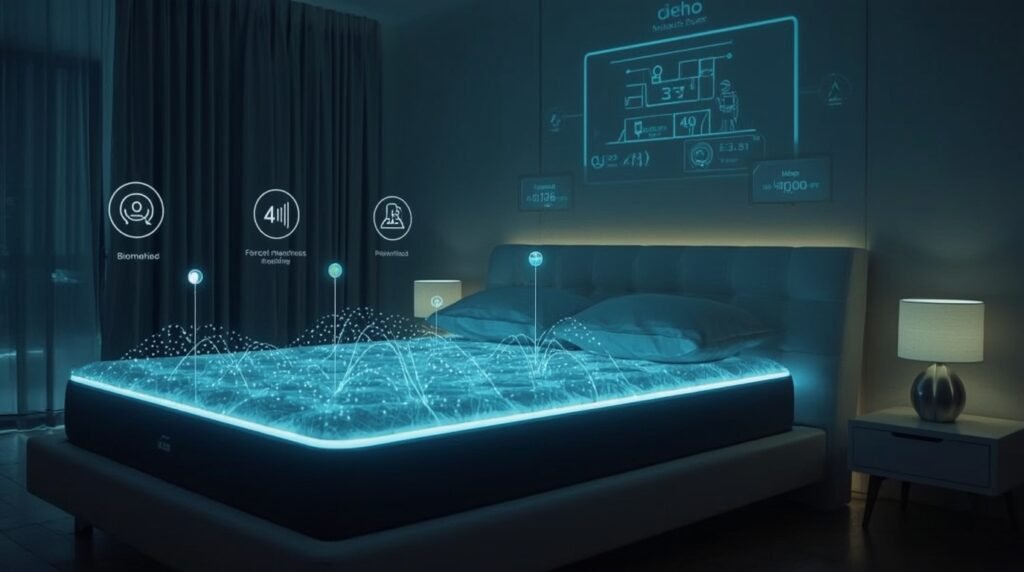
One of the more immersive forms of sleep technology devices is the smart bed system. These integrate sensors, temperature regulation, and even environment adjustment.
For instance, systems that can cool or heat the bed surface, detect breathing/heart rate, and prompt adjustments for better rest are becoming more common.
Pros: large scale integration; often passive once set up.
Limitations: cost, complex installation, subscription models for full features.
Key use case: for serious sleep optimization or those with persistent sleep problems driven by environment.
3. Ambient & Environment Tech
Sleep isn’t just about your body — it’s about your environment. Thus, many sleep technology devices focus on ambient conditions: lighting, sound, temperature, air quality.
Examples: sunrise/sunset lighting systems, smart noise masking devices, temperature‐regulated mattress covers, humidity and air filter sensors.
One trend in 2025 is hotels and wellness spaces using biometric sensors and integrated lighting systems to optimize sleep environments.
Pros: can have large effect for relatively lower cost; improve foundational sleep conditions.
Limitations: might still require behavioral change (e.g., turning off screens).
Key use case: Anyone wanting to improve sleep environment with actionable tech.
4. Non‐Contact & Clinical-Grade Monitors
For deeper insight, new sleep technology devices are shifting beyond wearables to non‐contact methods: radar sensors under the mattress, in‐ear EEG leads, acoustic/AI detection of snoring or sleep apnea.
Research in 2025 shows promising accuracy of in‐ear devices and radar systems for sleep stage monitoring.
Pros: minimal user burden; high fidelity for certain metrics.
Limitations: often expensive, may be designed for clinical rather than consumer use, privacy concerns.
Key use case: individuals with serious sleep disorders or needing clinical level monitoring without full lab studies.
What to Look for When Choosing Sleep Technology Devices
Selecting the right sleep tech device requires more than “cool features.” Here are criteria to guide your choice:
- Evidence & Accuracy: Does it have good validation data? Some devices may claim sleep tracking but lack rigorous backing. Over‐reliance on inaccurate devices (orthosomnia) can worsen sleep.
- Ease of Use & Comfort: A device that disrupts sleep (eg, bulky wearable) defeats the purpose.
- Integration & Ecosystem: Does it link to your phone, connect with environmental devices (lights/thermostat), or feed into coaching apps?
- Actionable Insights: Beyond numbers, does it offer suggestions to improve rest, not just observe?
- Privacy & Data Handling: Sleep data is personal; understand how device stores and uses your data.
- Cost & Subscription: Some devices require ongoing fees or upgrades.
- Behavioural Support: Tech can help, but behavior change often matters more. Devices should support, not replace, good sleep habits.
How to Use Sleep Technology Devices Effectively
To maximize benefits, use these best practices:
- Set Baseline First: Before buying, ensure your basic sleep hygiene is solid: consistent schedule, dark cool room, minimal screen exposure. Tech then acts as amplifier.
- Track for 2–4 weeks: Use the device consistently to collect data – don’t make major changes yet. Look for patterns.
- Make Adjustments Based on Data: For example, if a wearable shows late shallow sleep, adjust light exposure or temperature.
- Act on Insights: If your sleep mask shows wakefulness at midnight, evaluate environment (noise, partner movement) or devices (smart bed noise, ambient sensors).
- Avoid Over‐Monitoring: Obsessive tracking (orthosomnia) can create anxiety around sleep and worsen it. Use tech as a guide, not a worry-meter.
- Prioritize Behavior Change: Tech is a tool, not a cure. Regular schedule, limiting caffeine/alcohol, managing stress still matter most.
- Update & Integrate: Firmware updates, app improvements, and linking devices (lights, mattress, fan) can compound benefits.
- Use for Long-Term Trends, Not Night-to-Night Panic: Sleep naturally varies. Use devices to monitor long-term patterns rather than expecting perfection each night.
The Promise and Limitations of Sleep Technology Devices
Promise
- Personalized sleep optimization with actionable feedback.
- Automation of sleep environment (bed temperature, lighting, sound).
- Early detection of disorders (e.g., snoring, apnea) in home settings.
- Data to inform lifestyle and behavior change.
- Integration with broader wellness/tracking ecosystems (fitness, stress, recovery).
Limitations & Cautions
- Many devices are still consumer grade and not substitutes for clinical diagnosis. User beware of claims. aasm.org
- They may cost a lot. A high‐end smart mattress system can run into thousands of dollars. The Verge
- Over‐emphasis on tracking and optimization can cause anxiety (orthosomnia). TIME
- Some devices have accuracy limitations (especially cheaper models) — results should be interpreted cautiously.
- Tech alone cannot fix fundamental behavioral sleep issues: e.g., delayed sleep phase, shift work disruptions, chronic insomnia due to psychological factors.
Sleep Technology Devices Trends to Watch in 2025
Here are some standout trends shaping sleep tech devices this year and beyond:
AI & Personalised Sleep Coaching
Devices increasingly use AI to generate sleep scores, personalized advice, and adaptive environmental control. From app‐based suggestions to automatic bed adjustments, the era of “sleep tech devices” now means more than data—they mean action.
Smart Rings & Minimal Wearables
Instead of bulky watches, many users prefer smart rings or ultra-lightwear wearables that monitor HRV (heart rate variability), temperature, and breathing with minimal intrusion.
Non-Contact Monitoring
For greater comfort and compliance, devices that monitor sleep without being worn are gaining traction — radar sensors, mattress sensors, in‐ear EEG prototypes.
Smart Beds & Climate Regulation
Smart mattresses can now sense your body, regulate temperature, adjust position, and even integrate audio for guided sleep. Some already at CES and in 2025.
Clinical Grade Consumer Devices
Consumer devices are increasingly adopting features formerly only in clinics: sleep apnea detection via smartwatch, high‐fidelity stage tracking, and smart alarms tuned to sleep stage.
Integration with Broader Wellness
Sleep tech devices are no longer standalone. They integrate into wellness ecosystems: fitness trackers, stress monitors, diet apps, home automation — reflecting how sleep is central to overall health.
Practical Guide: Integrating Sleep Technology Devices into Your Routine
Here are steps to effectively incorporate sleep tech devices into your lifestyle:
Step 1: Define Your Sleep Goal
Are you trying to fall asleep faster, reduce awakenings, track REM duration, address snoring, or optimize environment? Clarify your goal first to choose the right device.
Step 2: Select Suitable Device(s)
- If budgets are small: pick environment tech (smart lights, cooled pillow) + basic tracker.
- If medium: smart ring + ambient sensor.
- If serious: smart bed + AI coaching + non‐contact monitoring.
Step 3: Establish Baseline and Use Device Consistently
Track your sleep for ~2–4 weeks without making major changes to understand normal patterns.
Step 4: Review Insights & Make Adjustments
Look for metrics like sleep latency, awakenings, body temperature, HRV, breathing rates. Address one variable at a time (e.g., room temperature) and monitor change.
Step 5: Integrate Behavior + Environment + Technology
True sleep improvement comes from combining:
- Good sleep hygiene (consistent schedule, dark room)
- Optimized environment (noise, temperature, light)
- Data and tech insights from sleep technology devices
Step 6: Reassess and Adjust
Every 3–4 months review if device is still useful, if data is actionable, and if any behavior changes have occurred.
FAQs About Sleep Technology Devices
1. Are sleep technology devices really effective?
Yes, many devices offer meaningful insights and environment controls. However they are tools—not guarantees. Their effectiveness depends on how you use them and whether underlying sleep hygiene is solid.
2. Can they replace a sleep study?
Generally, no. Consumer sleep technology devices can monitor many metrics, but they are not a replacement for a professional sleep lab if you have serious disorders like sleep apnea. Providers caution use of consumer devices for diagnosing.
3. What’s the most affordable entry point?
Ambience devices (smart lights, noise masking, smart plugs) or simple wearable trackers cost less than full smart bed systems. You can start small and expand.
4. Will tracking my sleep every night stress me out?
Yes—trackers can create anxiety about “perfect” sleep (orthosomnia). It’s wise to use them for patterns, not individual nights, and maintain a healthy mindset around variability.
5. How should I prioritize if I buy just one device?
Choose based on your biggest sleep barrier. If environment: smart lights/bed, you wake often: mattress/temperature system, you don’t know: a wearable ring to gather data first.
Conclusion: Embrace the Technology—but Keep Sleep Human
The era of Sleep Technology Devices is here — and it promises smarter, more personalized rest. In 2025, we’re moving beyond tracking to responding: devices that adjust and support, rather than just monitor. But even the most advanced sleep tech depends on you: your habits, your environment, your readiness to act on insights.
A smart wearable or mattress won’t fix stress, screen habits, or caffeine misuse. But when combined with solid sleep habits, behavioral consistency, and a room optimized for rest, sleep technology devices become powerful allies.
Ultimately, the future of rest isn’t gadgets replacing sleep—it’s technology amplifying what you already know: consistent, quality sleep matters. Embrace sleep tech devices as part of a broader sleep ecosystem, make data actionable, and allow your bedroom to become a true space of restoration.
Sleep better, smarter, and in 2025—and beyond—with the right tech, the right habits, and the right mindset.